
What Really Happens During a Tooth Implant Procedure
“Replacing a missing tooth can be the first step towards bringing comfort and confidence back to your smile.”
Losing a tooth does not mean the story ends with an empty space in your smile. Modern dental implants are designed to replace the missing tooth from the root upward, but the treatment involves several carefully planned stages rather than a single procedure. From the first consultation and jawbone assessment to implant placement, healing, and fitting the final crown, each step has a specific purpose in rebuilding the missing tooth. Understanding what happens at every stage can make the treatment process feel much clearer and help patients know what to expect. In this blog, we will walk through what really happens during a tooth implant procedure, including the planning, placement, healing, and restoration stages. For those considering a Tooth Implant in Alwarpet, knowing the complete treatment journey can help them discuss their options more confidently with a dental professional.
Starting With a Dental Consultation
Typically, a detailed consultation is done before the surgery is performed in a tooth implant procedure. The dentist takes a history of the patient’s dentition, examines the teeth and gums, and discusses with the patient the rationale for replacing the missing tooth. The first visit allows the dental team to gain insight into the mouth’s condition and plan the treatment based on the unique situation of the patient.
The consultation can involve:
- Dental history: Previous treatments, tooth loss, and relevant dental concerns are reviewed.
- Oral examination: Teeth, gums, and surrounding areas are checked prior to treatment planning.
- Medical information: These details may be discussed with the dental professional if they have existing health conditions or medications they are taking.
- Discussion of treatment: The dentist discusses the different stages of treatment, number of visits, and treatment options available.
- Individual treatment plan: The recommended implant treatment is customized to the individual patient’s needs.
Checking the Tooth and Jawbone
Prior to implant placement, the dentist will examine the condition of the jawbone and tissues. A scan of the area, such as an X-ray, may be performed to see if the area has enough bone to hold the implant. In some cases, when there is not enough bone, other treatment (such as a bone graft) may be recommended prior to implant placement.
The assessment can look at:
- Jawbone condition: The available bone is assessed for implant support.
- Bone Volume: The dentist examines the area where the implant is to be placed to see if there is enough bone.
- Gum health: The gum tissue around the tooth is assessed prior to surgery.
- Close-by structures: Imaging may aid the dental team’s understanding of key areas.
- Patient preparation: For certain patients, other procedures might be needed prior to implant placement.
Planning the Implant Placement
After evaluating the condition of the mouth, the next step is to develop a treatment plan for the location and insertion of the implant. The dentist takes into account the missing tooth, available bone, bite, surrounding teeth, and the final restoration. Planning is important when coordinating the surgical and restorative phases of treatment.
Planning may involve:
- Implant position: Determining the appropriate location for the implant.
- Treatment sequence: Deciding whether extraction, grafting, implant placement, and restoration need to be staged.
- Restoration planning: Taking the end crown or other replacement tooth into account from the outset.
- Imaging guidance: Use of available imaging scans or X-rays to help plan treatment.
- Timeline: Estimating the different stages and healing periods involved.
Preparing the Mouth for Treatment
In some cases, preparation work may be required before the implant is placed in position, depending on the condition of the tooth and surrounding tissues. If a tooth is still broken, it may have to be pulled. In some cases, if enough bone is not available, a bone-grafting procedure may be recommended, followed by a healing period before implants will be placed.
Preparation may include:
- Extraction of the tooth: If the tooth is damaged, it may need to be pulled.
- Bone preparation: Bone grafting may be considered when there is not enough supporting bone.
- Gum evaluation: A thorough evaluation of the condition of the gums around the dentition is done prior to surgery.
- Treatment timing: There may need to be additional procedures, and each one of those has a healing period.
- Oral preparation: The mouth is prepared as the dentist has planned for the treatment procedure.
Placing the Implant
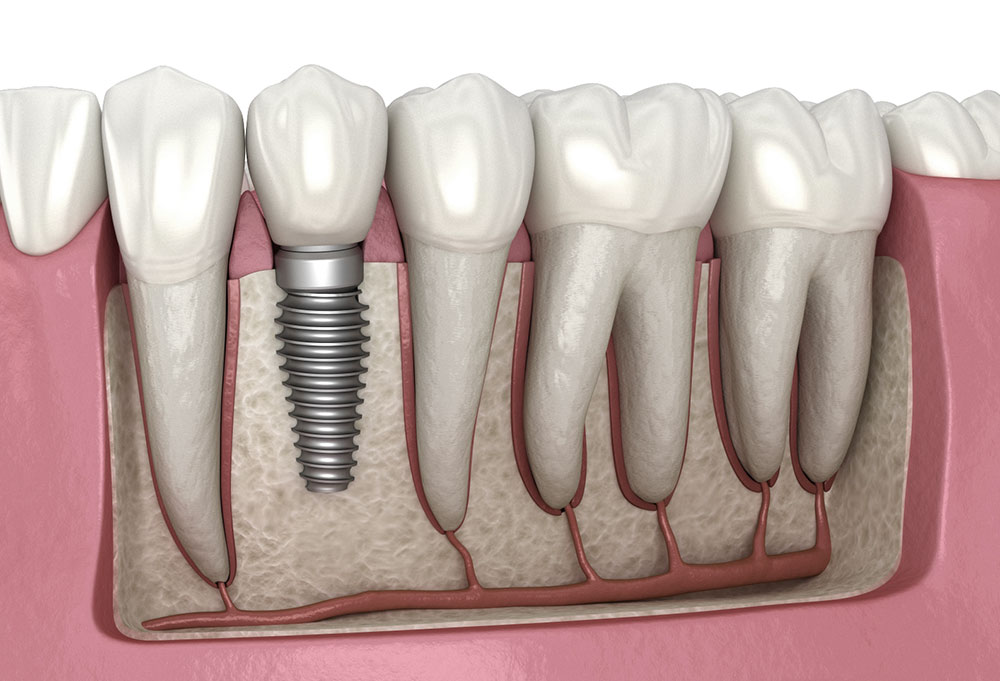
The implant is a small implant post that is medically inserted in the jawbone to serve as a fake tooth root. The area is numbed with anaesthetic during the procedure; the gum is opened, the jawbone is prepared, and the implant is installed. The gum is then sealed, and the healing process for the implant starts.
The process typically consists of:
- Local anaesthesia: The area to be treated is numbed prior to the surgical work.
- Gum opening: The gum is cut to create a small opening, which makes way for the underlying jawbone.
- Preparation of the bone: The bone at the implant site is prepared to accept the implant.
- Implant placement: The implant post is positioned in the planned location.
- Gum closure: The area to be treated is closed, allowing healing to start.
Provide Recovery Time
For the most part, the implant is not put in place with the final tooth right after implantation. The jawbone must heal around the implant and establish a firm bond between itself and the implant. This is called osseointegration and is a crucial step in the creation of a stable foundation for the final restoration. It takes different amounts of time for people to heal in different situations.
During this stage:
- Healing of the bone: Bone slowly grows around the implant.
- Healing process: Healing promotes the stabilization of the implant in the jaw.
- Follow-up visits: The dentist observes healing and the area of treatment.
- Temporary tooth: If necessary for the location and treatment plan, some patients might be given a temporary tooth.
- Healing period: The time required varies according to the individual case and procedures performed.
Adding the Abutment
Once the implant is sufficiently healed, the next step is the abutment. This tiny connector is attached to the implant and will serve as a base for the replacement tooth. Some patients will need a separate minor procedure to place the implant, while other treatment plans for implant placement may be different depending on the implant system used and the type of treatment.
The abutment stage is characterized by:
- The abutment is the part that is connected to the implant
- Gum tissue surrounding the new part is treated accordingly
- The abutment connects the implant and the crown for restoration support
- The dentist checks the position and stability before moving ahead
- The area is prepared for the final artificial tooth
Preparing the Replacement Tooth
The visible replacement tooth is not a part of the implant itself. The dentist may take impressions or use digital scanning to capture the shape and position required for the restoration. This information is then applied to the making of a crown that fits the patient’s mouth and bite.
The crown preparation can involve:
- Impression or scanning: The outline of the area is captured for use in the design of the restoration.
- Tooth shade: The colour can be chosen to match the other teeth.
- Crown design: The restoration will be designed to fit the position of the missing tooth.
- Bite aspects: The crown must fit without any problems with surrounding teeth.
- Laboratory fabrication: The final restoration can be fabricated in a dental laboratory.
Restoring Your Smile
A tooth implant involves several stages, and each one contributes to creating a stable and functional replacement for a missing tooth. From the initial examination and treatment planning to implant placement, healing, crown fitting, and regular aftercare, the process is designed around the individual needs of the patient. Understanding these stages can help you know what to expect and why professional evaluation is important before starting treatment. For people considering a Tooth Implant in Alwarpet, discussing the available options with a qualified dental professional can help you understand the suitable treatment approach for your dental condition.
Frequently Asked Questions
- What is a tooth implant?
A tooth implant is a replacement for a missing tooth that uses an implant placed in the jawbone to support a replacement tooth. - How long does a tooth implant procedure take?
The complete treatment can take several months because healing time is required between certain stages. The exact timeline varies depending on the individual’s dental condition and treatment plan. - Is a tooth implant suitable for everyone?
Suitability depends on factors such as jawbone condition, gum health, oral health, and other individual treatment requirements. A dental examination is necessary before treatment. - How should I care for a tooth implant?
Regular brushing, cleaning between the teeth, dental check-ups, and following your dentist’s aftercare instructions can help maintain the implant and surrounding oral tissues. - How can I find a suitable Tooth Implant in Alwarpet?
Look for a qualified dental professional who can examine your oral condition, explain the treatment stages, discuss suitable options, and provide follow-up care.